

Why Hairline Cracks in Plaster Worry Homeowners And What to Do About Them
Hairline cracks in pool plaster are one of the most common things Tampa pool owners notice, and they can be alarming at first glance. Spotting thin lines across your pool’s interior finish triggers concern, especially when you’re not sure whether it’s surface crazing or a sign of something structural. Without understanding what these cracks indicate, homeowners are left anxious about potential damage.
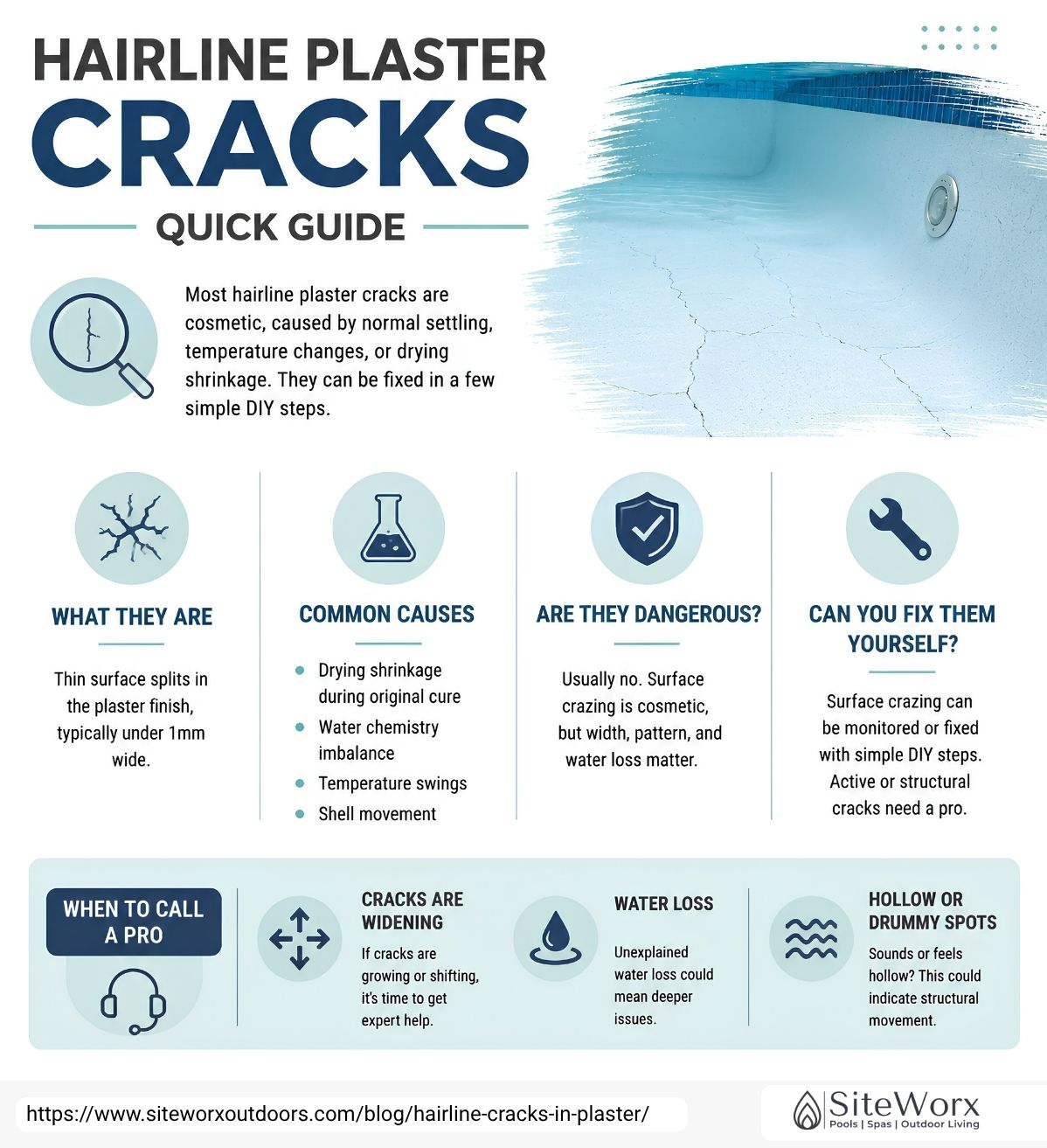
Most hairline plaster cracks are cosmetic, caused by normal settling, temperature changes, or drying shrinkage. They can be fixed in a few simple DIY steps. Here’s what you need to know at a glance:
- What they are: Thin surface splits in the plaster finish, typically under 1mm wide.
- Most common causes: Drying shrinkage during the original cure, water chemistry imbalance, temperature swings, shell movement.
- Are they dangerous: Usually no, surface crazing is cosmetic, but width, pattern, and water loss matter.
- Can you fix them yourself: Surface crazing can be monitored; active or structural cracks need a pro.
- When to call a pro: If cracks are widening, you’re losing water, or you notice hollow/drummy spots
The worry is understandable. Some surface crazing is extremely common in plaster pools and is almost always cosmetic. The uncertainty is the hard part: telling a harmless craze pattern from an active structural crack is what trips people up. Guess wrong, and you either overspend on a non-issue or let a real leak quietly worsen.
The solution is informed inspection and targeted repair. By identifying the type and cause of each crack, homeowners can address cosmetic issues safely while preventing minor structural cracks from worsening. Proper evaluation gives you repairs that hold, protects the pool shell, and takes the guesswork out of whether a crack is harmless or serious.
I’m Ryan Marsh, founder of SiteWorx Pools, Spas, & Outdoor Living, and with over 30 years of collective industry experience across hundreds of pool construction and remodeling projects, I’ve seen how small cracks in pool plaster can spiral when they’re handled the wrong way. Let’s make sure that doesn’t happen to your pool.
This educational guide focuses strictly on evaluating cosmetic hairline cracks (crazing) and structural fractures within submerged inground pool plaster finishes. For resolving tile line degradation or coping failures, see our specialized pool tile replacement overview. For complete structural overhauls or patio expansions, explore our primary pool deck remodeling page.
Understanding Hairline Cracks in Plaster vs. Structural Damage
To fix a pool crack the right way, you have to know what you’re looking at. Pool plaster is a thin cementitious coat usually about 3/8 inch troweled over the gunite or shotcrete shell. It’s rigid and bonded to the structure beneath it, so it shows two very different kinds of cracking.
Surface crazing (also called check cracking) is a fine, shallow spiderweb pattern in the plaster coat itself. It forms during curing or from chemistry swings and almost never reaches the shell. Structural cracks run deeper, originate in the concrete shell, and can let water escape behind the finish. Telling them apart is the whole game.
Before grabbing your putty knife, use the comparison table below to determine whether your wall needs a simple cosmetic touch-up or professional attention.
| Feature | Cosmetic Crazing | Structural Cracks |
|---|---|---|
| Width | Hairline, under 1mm | Often 2mm+ and growing |
| Pattern | Fine spiderweb / random check pattern | Single defined line, often vertical or diagonal on the shell |
| Location | Across the plaster finish surface | Often at stress points, steps, corners, light niches, tile line |
| Key Signs | No water loss; surface stays sound | Measurable water loss, hollow/drummy spots, staining at the line |
| Action Needed | Monitor; address during next resurface | Professional leak detection and shell inspection |
What Are Hairline Cracks in Plaster and Why Do They Form?
At their core, hairline cracks are tiny surface splits. During the initial curing and drying process of new plaster, moisture loss causes the material to shrink. If the plaster dries too quickly, “plastic shrinkage” occurs, leaving behind a web of fine crazing.
To understand the physical properties of cementitious hydration in aquatic environments, check out the National Plasterers Council Technical Guide on Surface Cracking to observe how micro-fractures interact with water immersion.
For older properties throughout Hillsborough and Pasco counties, environmental factors are the main culprits. Pool plaster is rigid. As temperatures swing between hot Florida days and cooler nights, and as your water chemistry shifts, the finish expands and contracts slightly. When it can’t flex, fine surface crazing appears. This is normal and usually cosmetic.
Cosmetic Hairline Cracks vs. Structural Warning Signs
While most cracks are harmless, you must know when a crack is a symptom of foundation movement. The clearest warning sign in a pool isn’t crack width; it’s water loss. If your pool is dropping more than the normal quarter-inch or so per week due to evaporation, or you see staining, hollow-sounding spots, or a crack that’s clearly getting longer, you’re likely past cosmetic and into a shell issue that needs leak detection.
If your pool is dropping water rapidly past normal seasonal metrics, you can reference the City of Oklahoma City Pool Water Efficiency and Leak Diagnostic Guide to benchmark normal atmospheric evaporation rates against a suspected shell or plumbing leak.
Can You Repair Pool Plaster Cracks Yourself?
Honestly, for most pool owners, no, and that’s not a sales pitch. Cosmetic surface crazing usually doesn’t need active repair; it’s addressed cosmetically the next time you resurface. Anything beyond that a crack losing water, a hollow spot, a line through the shell needs a drained pool, proper chip-out, and a bonded re-plaster or shell repair. Filling a structural pool crack with surface filler traps the problem and almost always fails.
The one thing fully in your control is prevention: keep your water chemistry balanced. That alone prevents most premature plaster failure.
When to Reinforce vs. Simply Fill Hairline Cracks in Plaster
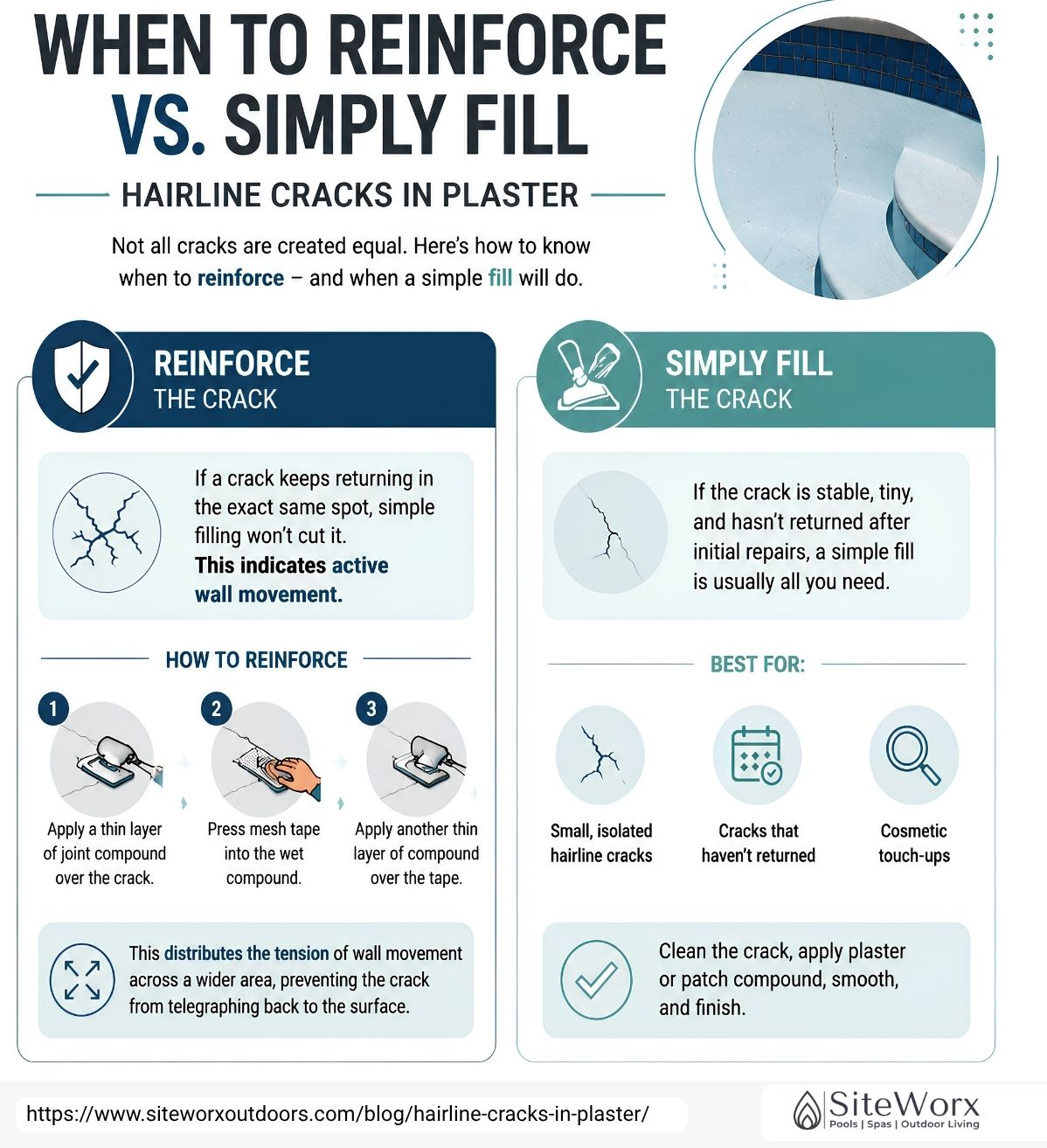
If a crack keeps returning in the exact same spot, simple filling won’t cut it. This indicates active wall movement. In these scenarios, you must reinforce the area using fiberglass mesh tape or paper tape before applying your finish coats.
To do this, apply a thin layer of joint compound directly over the crack, press your mesh tape into the wet compound, and then apply another thin layer over the tape. This distributes the tension of wall movement across a wider area, preventing the crack from telegraphing back to the surface.
If you are dealing with widespread, spiderweb-like crazing across your pool floor or walls, continuous localized patching can turn into a never-ending cycle. In these severe cases, the plaster finish has likely reached the end of its functional lifespan, making a comprehensive surface stripping and structural aggregate replacement the most efficient path forward. For an engineering breakdown of when to monitor superficial fractures versus when a finish requires full remediation, check out the definitive industry field study on pool plaster check cracks and plastic shrinkage parameters.
How to Prevent Future Plaster Cracking
Once your walls are beautifully repaired, you want them to stay that way. Prevention comes down to controlling the environment inside your home:
- Balance your water chemistry: Keep calcium hardness, pH, and alkalinity in range. Aggressive (low-calcium) water leaches minerals out of the plaster and etches the surface.
- Avoid rapid draining: Draining a pool in Florida’s high water table can crack or pop the shell. Always drain with a pro and proper hydrostatic relief.
- Protect a fresh finish during cure: Don’t let new plaster sit exposed to harsh sun and wind before filling; rapid moisture loss causes check cracking.
Just like maintaining your home’s interior, keeping outdoor aquatic features balanced prevents similar structural and cosmetic plaster issues. Learn more about protecting your outdoor investments with our guide on Pool Maintenance.
When to Call a Professional for Plaster and Pool Remodeling
Some pool plaster issues are clearly past DIY. If you find a crack that’s losing water, hollow spots when you tap the surface, or staining tracking along a fracture line, it’s time to bring in a pro before a small finish issue becomes shell damage. If you live in Tampa, Brandon, or Lakewood Ranch, your pool’s plaster takes constant water pressure, chemical exposure, and temperature swings conditions that turn a neglected crack into a costly structural repair fast.
At SiteWorx Pools, Spas, & Outdoor Living, we specialize in transforming backyard spaces through world-class design, elite craftsmanship, and seamless project execution. Whether you need a pool tile refresh, deck upgrades, or a complete overhaul, we bring over 30 years of collective industry experience directly to your backyard.
Key Takeaways:
- Cosmetic Crazing Thresholds: Fine, superficial spiderweb cracks (crazing) are common outcomes of drying shrinkage or minor chemistry shifts and do not compromise the structural integrity of the concrete pool shell.
- Hydration and Curing Rules: Exposing fresh pool plaster to hot Florida sun and winds before filling the pool can cause rapid hydration loss, accelerating the development of surface check cracks.
- Confirming a Leak: A pro can run a dye test; diagnostic dye gets drawn into an active crack, confirming water is escaping through the shell rather than just surface crazing.
- Chemical Saturation Vulnerabilities: Neglecting proper water chemistry, specifically calcium hardness levels, can cause pool water to leach minerals directly out of the aggregate finish, weakening the plaster over time.
Remediating structural concrete shell leaks, delaminated plaster coatings, or extensive surface etching requires certified hydraulic engineering and professional plastering oversight. For precise property inspections, comprehensive resurfacing alternatives, and modern structural aggregate upgrades, explore our specialized Tampa Pool Construction Services page or contact us today to coordinate a detailed site evaluation with a specialist.

Recent Articles

Stamped Concrete Pool Deck: Design, Durability, and How It Performs in Florida Heat
By Ryan Marsh |
How Much Does a Custom Pool Cost in Tampa, FL?
By Ryan Marsh |