


Is a Stamped Concrete Pool Deck Right for You? Here’s What You Need to Know
A pool deck may seem like a simple part of your backyard, but aging concrete, shifting pavers, or weathered wood can quietly turn it into a liability. Cracks, slippery surfaces, weeds in the joints, and extreme Florida heat can make a once-inviting space unsafe and uncomfortable. Without a proper solution, your poolside area risks becoming more of a hazard than a retreat.
Here’s a quick summary of what you need to know:
- What it is: Concrete that’s poured, then pressed with textured molds to mimic materials like flagstone, slate, or wood plank
- How long it lasts: 25 to 30 years or more with proper care
- Cost: Roughly $10–$18 per square foot for a new stamped deck; $7–$12 for an overlay on a sound existing slab
- Key benefits: Slip-resistant, seamless (no weed gaps), customizable, and cooler underfoot in light colors
- Main maintenance need: Reseal every 2–3 years and clean regularly with mild detergent
- Best for: Homeowners who want premium aesthetics, low maintenance, and long-term durability
The consequences go beyond safety. Ongoing repairs, re-grouting, pressure washing, and restaining add up in cost and time, yet the deck can still look outdated and worn. Homeowners who ignore these issues often face frustration and a backyard that fails to live up to its potential. A poor or aging deck diminishes the enjoyment of your pool and can reduce property appeal.
A professionally installed stamped concrete pool deck solves these problems. It delivers the look of natural stone, wood, or tile with the strength of concrete slip-resistant, sealed, and built for Florida’s climate for decades. With careful design and installation, your deck becomes a safe, low-maintenance centerpiece that lifts the whole backyard.
I’m Ryan Marsh, founder of SiteWorx Pools, Spas, & Outdoor Living, and I’ve spent over 30 years in the pool industry working alongside hundreds of builders and design firms across the country, including designing and building stamped concrete pool decks right here in Tampa Bay. Let’s get into what makes this surface worth the investment, and what it takes to do it right.
This guide addresses the structural mechanics, heat mitigation properties, pattern selections, and long-term maintenance of stamped concrete pool decks. For information regarding structural modifications, waterline tile updates, or changing an existing layout, view our primary Pool Remodeling Guide. For curated pool builds with pre-configured options, explore our Streamline Collection.
Why a Stamped Concrete Pool Deck Works for Florida Backyards
When designing a custom pool area, evaluating the backyard as a cohesive environment is essential. A pool deck should not act as a mere boundary; it should seamlessly extend the home’s primary living space. Choosing a stamped concrete pool deck is one of the most effective ways to elevate an entire backyard retreat.
Here is why stamped concrete has become the go-to choice for modern, high-end pool designs:
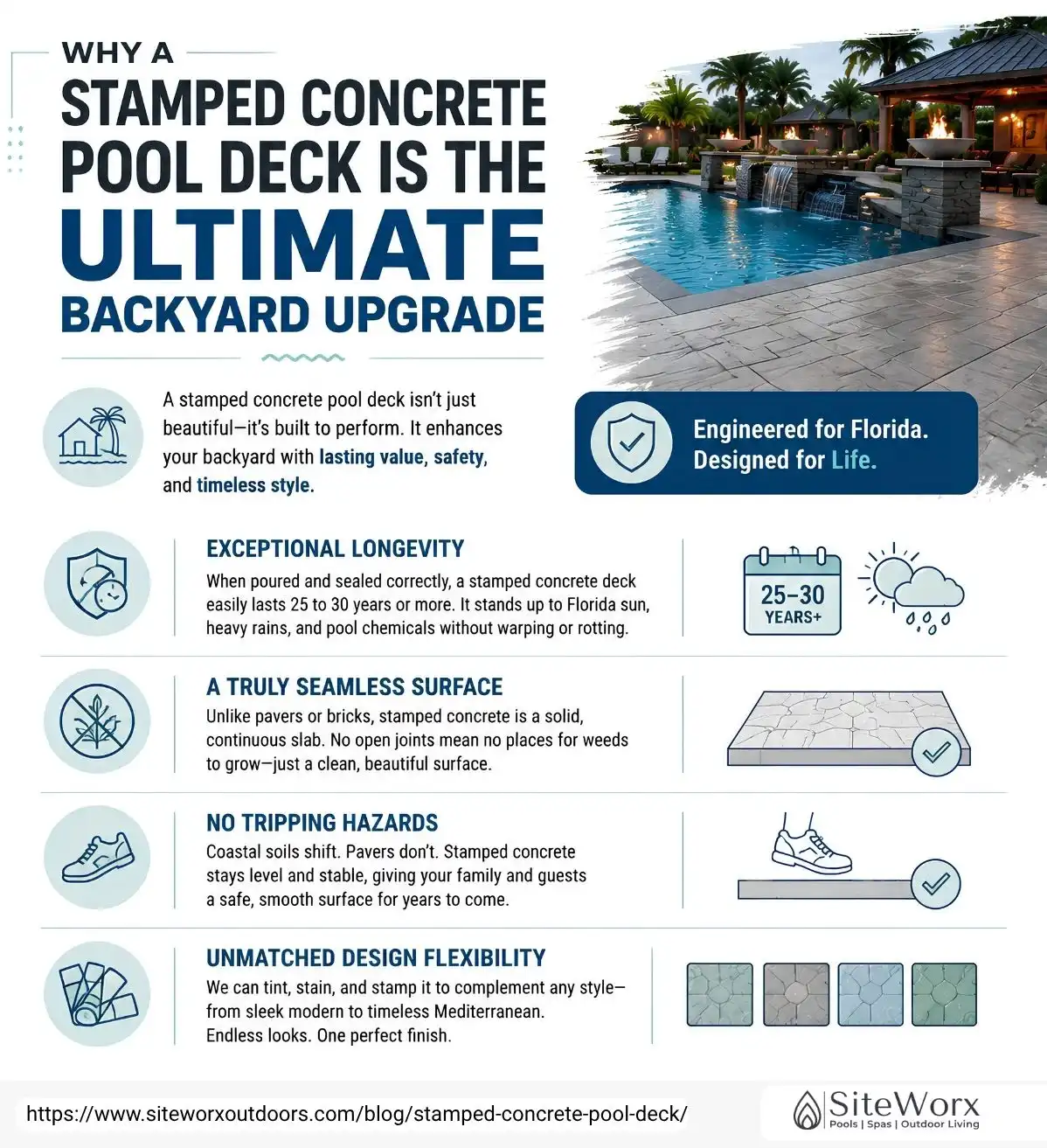
- Exceptional Longevity: When poured and sealed correctly, a decorative concrete deck will easily last 25 to 30 years or more. It handles the brutal Florida sun, heavy seasonal downpours, and pool chemical splashes without warping or rotting.
- A Truly Seamless Surface: Unlike pavers or bricks, stamped concrete is a solid, continuous slab. This means there are no open sand joints where airborne seeds can land and grow into unsightly weeds.
- No Tripping Hazards: Over time, shifting sandy soils in coastal areas like Tampa and Riverview can cause individual pavers to sink or rise. Stamped concrete remains a stable, uniform surface, keeping your family and guests safe from unexpected stubbed toes.
- Unmatched Design Flexibility: Stamped concrete is highly customizable. We can tint, stain, and mold it to match any architectural style, from sleek contemporary homes in South Tampa to Mediterranean-style estates in Wesley Chapel.
Comparing a Stamped Concrete Pool Deck to Alternative Materials
How does stamped concrete stack up against other popular choices? When deciding on the Best Decking Materials for Pool Design, it helps to look at the practical trade-offs.
- Concrete Pavers: While pavers offer excellent drainage and are easy to replace individually, they are prone to settling, weed growth, and joint sand washout during our heavy summer storms.
- Natural Travertine: Travertine is beautiful and naturally stays cool underfoot, but it is a premium material that requires a substantial budget. Stamped concrete can mimic this high-end look at a fraction of the cost.
- Wood and Composite Decking: Wood decks require constant staining, can splinter, and rot in Florida’s high humidity. Composites resist rot but can get incredibly hot under the summer sun and offer limited design flexibility.
- Broomed Concrete: This is your basic, budget-friendly textured concrete. While slip-resistant, it lacks the luxury aesthetic that most homeowners want for their custom pool builds.
- Carvestone Overlays: A modified concrete overlay like Carvestone is highly durable and rated for high compressive strength, making it a strong premium option for resurfacing existing, structurally sound slabs.
| Decking Material | Relative Cost | Maintenance Level | Heat Resistance | Weed/Shift Risk |
|---|---|---|---|---|
| Stamped Concrete | Moderate | Low (Reseal every 2–3 years) | High (with light colors) | None |
| Concrete Pavers | Moderate to High | Medium (Weeding, sanding) | Medium | High |
| Travertine Pavers | High | Low to Medium | Very High | Medium |
| Wood Decking | High | High (Staining, sealing) | Medium | Low (Warping risk) |
Customizing Your Stamped Concrete Pool Deck: Patterns and Colors
The beauty of a stamped concrete pool deck lies in the endless creative options. By combining realistic stamping mats with advanced coloring techniques, we can replicate almost any premium material.
Popular Stamping Patterns
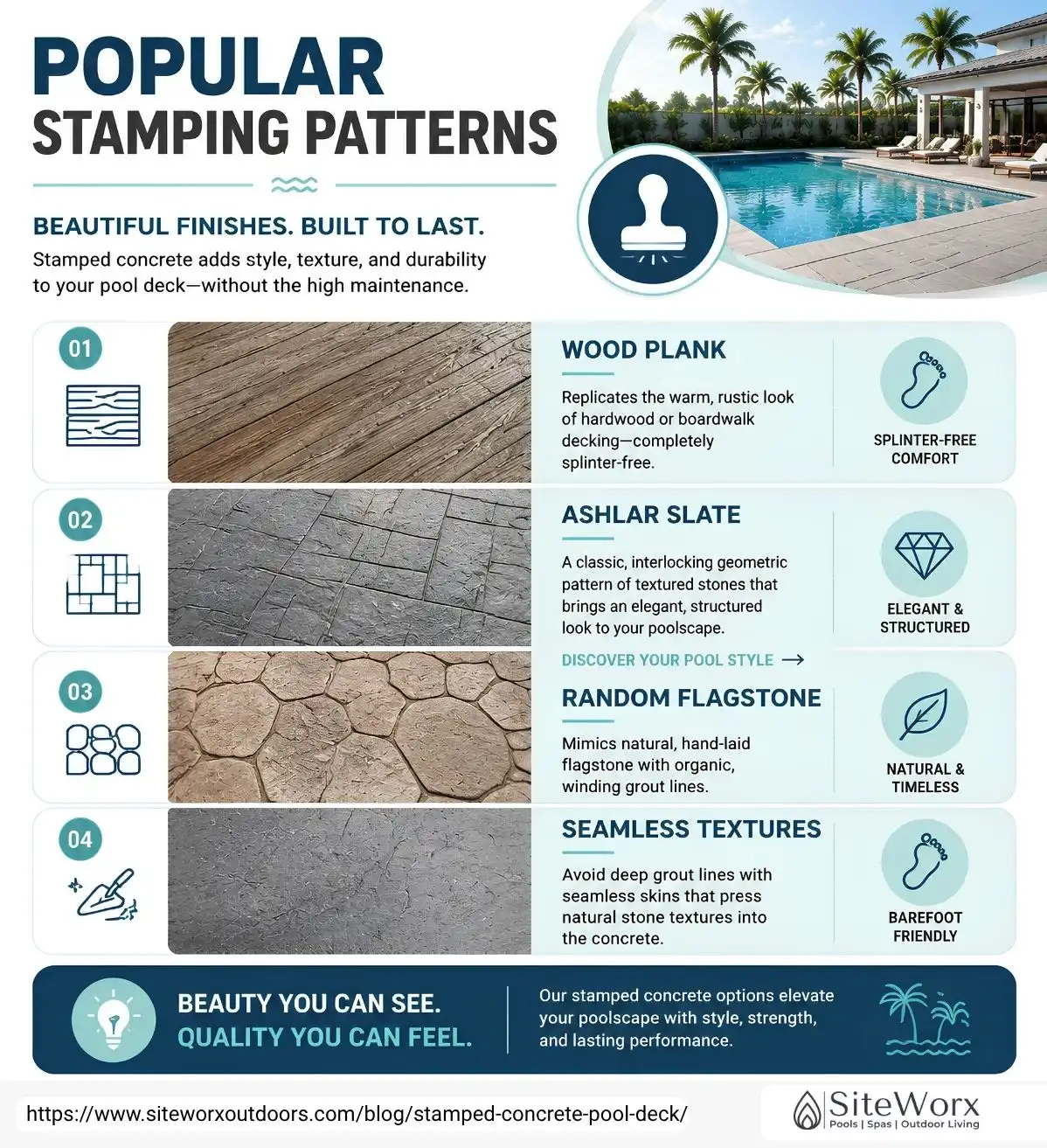
- Wood Plank: Replicates the warm, rustic look of hardwood or boardwalk decking—completely splinter-free.
- Ashlar Slate: A classic, interlocking geometric pattern of textured stones that brings an elegant, structured look to your poolscape. You can explore more about this style in our guide to help you Discover Your Pool Style.
- Random Flagstone: Mimics natural, hand-laid flagstone with organic, winding grout lines.
- Seamless Textures: If you want to avoid deep grout lines entirely, seamless skins press a continuous, natural stone texture (like Roman slate or sandstone) into the concrete. This is highly recommended for barefoot comfort.
Color Artistry
We use two primary coloring methods to create depth and realism. First, an integral color is mixed directly into the wet concrete, establishing a consistent base tone. Next, we apply a release agent or antiquing accent. This powder or liquid acts as a bond breaker for the stamping tools and settles into the deep textures of the pattern, creating realistic shading.
For the Florida heat, we always recommend choosing light colors like sand, buff, ivory, or light gray. Choosing a high solar reflectance index matters here. Reflective, light-colored hardscaping stays cooler at midday than dark surfaces, a difference the EPA covers in its cool pavements guidance. If you are tracking local landscape shifts, reviewing our analysis of current pool design trends in Tampa provides direct insight into how modern geometric shapes and concrete hardscaping function across regional lot layouts.
Slip Resistance and Heat Management Around the Pool
Safety is always our top priority. A common misconception is that stamped concrete is naturally slick. While a highly polished, untextured concrete surface can be slippery when wet, we use specific techniques to ensure excellent traction.
- Textured Patterns: Choosing patterns with built-in texture—like slate or wood grain—naturally increases grip.
- Non-Slip Sealers: When sealing the deck, we mix specialized polymer slip-resistant additives (such as SharkGrip or SureGrip) directly into the sealer. Alternatively, we can broadcast aluminum oxide grit onto the wet sealer coat. This creates a fine, invisible “sandpaper” texture that dramatically improves wet slip resistance without affecting the beauty of the design.
- Beat the Heat: Tampa summers are unforgiving. Light-colored surfaces reflect more sunlight than dark ones, which is why a lighter deck runs cooler underfoot. It’s the same reflectance principle behind Lawrence Berkeley National Laboratory’s cool pavements research, and it keeps your pool deck comfortable for bare feet even in mid-July.
Design, Installation, and Maintenance of Decorative Concrete
A great pool deck requires more than just pouring concrete; it demands precise engineering. At SiteWorx, we design every deck with proper structural integrity.
This includes planning a 1/4-inch-per-foot slope away from your pool and home for fast stormwater drainage. We also carefully plan expansion joints to control natural concrete movement and ensure seamless coping integration around your pool’s edge.
The Installation and Resurfacing Process
Whether we are building a brand-new pool in Wesley Chapel or remodeling an existing backyard in Tampa, the installation process follows strict phases to guarantee a flawless finish.
- Site Prep & Base Compaction: We excavate the area and compact a solid gravel base. This prevents the concrete from settling or cracking due to Florida’s sandy soil.
- Pouring & Finishing: The concrete is poured and reinforced with steel rebar or structural fibers. We finish the surface with a float rather than a steel trowel to keep the texture slightly open and slip-resistant.
- Stamping: While the concrete is in its plastic state, our artisans apply the release agent and press the stamping mats with precision.
- Cantilevered Edges: For a modern, seamless look, we often install Stamped Concrete Cantilevered Pool Decks , where the deck concrete wraps right over the pool edge, eliminating the need for separate coping stone.
- Curing & Sealing: After the concrete cures, we wash away the excess release agent, cut control joints, and apply the protective sealer.
If you have an existing deck that is structurally sound but looks dated, you don’t necessarily need to tear it out. We can apply an engineered decorative concrete overlay to transform your old surface, utilizing industry-standard structural revitalization methods to upgrade your poolscape without full demolition costs.
Long-Term Maintenance and Sealing Best Practices
Keeping your stamped concrete looking brand new is incredibly easy, but it does require a consistent routine.
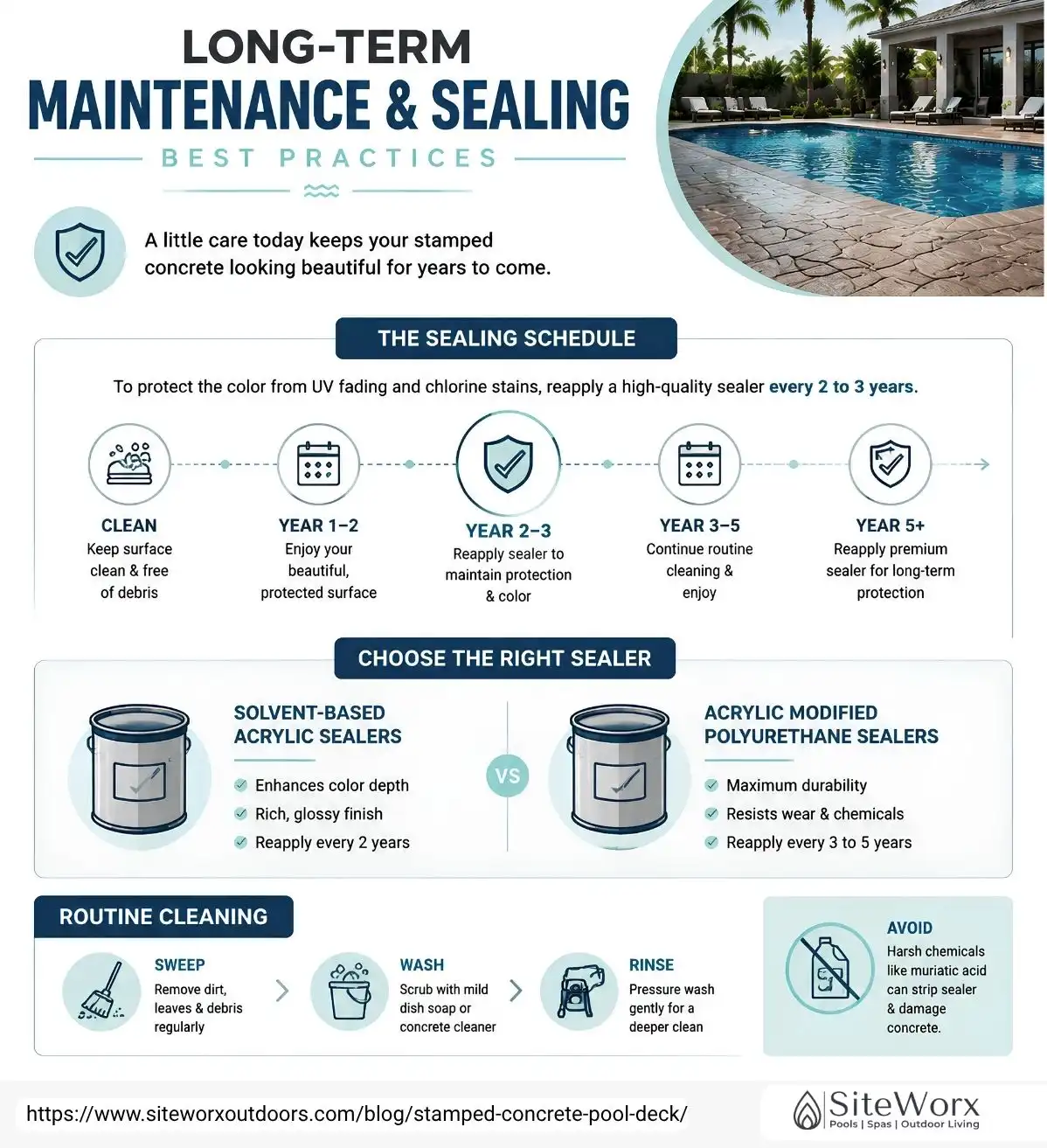
- The Sealing Schedule: To protect the color from UV fading and chlorine stains, you should reapply a high-quality sealer every 2 to 3 years.
- Choosing the Right Sealer:
- Solvent-Based Acrylic Sealers: Excellent for enhancing color depth and providing a rich finish. These typically need to be reapplied every other year.
- Acrylic Modified Polyurethane Sealers: A highly durable, premium option that can last 3 to 5 years before needing a refresh.
- Routine Cleaning: Regularly sweep away dirt and leaves to prevent organic staining. For a deeper clean, simply rinse the deck, scrub with a mild dish soap or specialized concrete cleaner, and pressure wash gently. Avoid harsh chemicals like muriatic acid, which can strip the sealer and damage the concrete.
Cost Considerations and Choosing the Right Contractor
A new stamped concrete deck typically runs $10 to $18 per square foot, while an overlay on a structurally sound existing slab runs about $7 to $12. Your final price depends on design complexity, border and accent work, coping choices, and the condition of any existing concrete. Multiple colors and intricate stone or tile patterns push toward the upper end (LinkedConcrete, 2026 FL pricing).
When planning your budget, stamped concrete is a major value-add. It offers the luxurious look of natural stone or travertine at a much more accessible price point, saving you thousands of dollars upfront and reducing maintenance costs down the road.
To get a deck that lasts for decades, avoid common installation pitfalls like poor base prep, inadequate drainage, or rushed sealing. This is why working with an elite, professional team is so important. You can read more about Why Quality Matters in Outdoor Projects to understand the long-term benefits of expert craftsmanship.
Key Takeaways:
A good pool deck in Florida has to do two things: stay safe underfoot and hold up to constant sun and heat.
- Prioritize Structural Longevity: Correctly poured and sealed decorative concrete creates a solid, continuous slab engineered to endure intense UV exposure and heavy seasonal downpours for 25 to 30 years.
- Mitigate Soil Shifting Risks: Unlike separate paver stones which frequently rise, sink, or develop weed gaps in shifting sandy soils, a uniform concrete slab maintains a completely flat, stable surface profile.
- Integrate Hidden Slip Resistance: Prevent slick wet surfaces by avoiding polished textures; utilize deep-relief patterns like slate or wood plank and incorporate specialized polymer anti-slip additives directly into the sealer coat.
- Keep It Cool Underfoot: Choose light base colors like sand, ivory, or light gray. They reflect more sun and keep the deck cooler in peak summer heat.
Relying on unreinforced concrete placement or improper base preparation can leave outdoor living spaces highly vulnerable to premature cracking and settlement. A pool deck that lasts takes disciplined structural work and proper drainage grading. Explore our core pool construction services to learn more about our low-volume, high-craftsmanship process, or reach out to our team directly to discuss your backyard vision.

Recent Articles

Hairline Cracks in Pool Plaster: What Tampa Pool Owners Need to Know
By Ryan Marsh |
How Much Does a Custom Pool Cost in Tampa, FL?
By Ryan Marsh |